Introduction
So, you decided to record your solo podcast. You have an idea, you have a name, you may even have a script, but you still do not really know how to handle the technical side. I was in the same place. This information is available in many places, but collecting it all in one place takes some time. I will walk you through the whole process: choosing the gear and the place to record, then recording, editing, hosting, and publishing. I will describe the path I chose myself.
What should you record with?
When someone asks you what is the most important thing in a podcast, you will answer: the content! And that is partly true. A listener can forgive a lot, but you should still take care of audio quality. This does not mean you have to rent a recording studio right away. You can do it cheaply and well.
If you have typical computer headphones with a microphone, then… put them away. Do not do it. They will not give you good quality.
Budget option: phone
New phones have a built-in microphone that is good enough to record a podcast episode. iPhones are usually recommended because they have pretty decent components, but I think any reasonably new flagship phone will manage. I mention this because this advice appears very often. I considered this option, but in the end I decided to spend some money at the start.
Microphone type
Once you start looking for a podcast microphone, one question will appear: dynamic or condenser? Here is what you need to know about them so you do not look like an amateur:
Condenser microphones
As the name suggests, there must be some kind of condenser in there. And there is. The microphone diaphragm and the plate behind it form a capacitor. When sound hits the diaphragm, the distance between those plates changes, so the capacitance changes as well. These changes are very delicate. To process them, additional power is required. The standard is +48 V phantom power.
Pros
- Very high sensitivity - they capture even the smallest details of sound
- Great quality and natural sound - especially for vocals and acoustic instruments
- Wide frequency response - better reproduction of tones, especially high ones
Cons
- They pick up a lot of sounds from the room - noise, echo
- They require phantom power (+48 V)
- They are delicate and less resistant to damage and moisture
Dynamic microphones
A speaker is basically a diaphragm with a magnet. The magnet is moved by the changing electromagnetic field of a coil behind it. A dynamic microphone works the other way around. The diaphragm moves the magnet, which causes changes in the electromagnetic field in the coil, and that is converted into sound.
Pros
- Very durable and resistant to damage
- They do not require additional power
- They reject background noise well
- Perfect for:
- live performances
- podcasts recorded in a normal room
- streaming
Cons
- Lower sensitivity - fewer details and a more “radio” sound
- Narrower frequency response
- Worse for subtle studio recordings, like high-end vocals
The choice is simple
For a podcast, if you do not have your own studio, a dynamic microphone is the natural choice. It forgives a lot, and that “radio” sound is a plus for me.
OK, but what exactly should you choose?
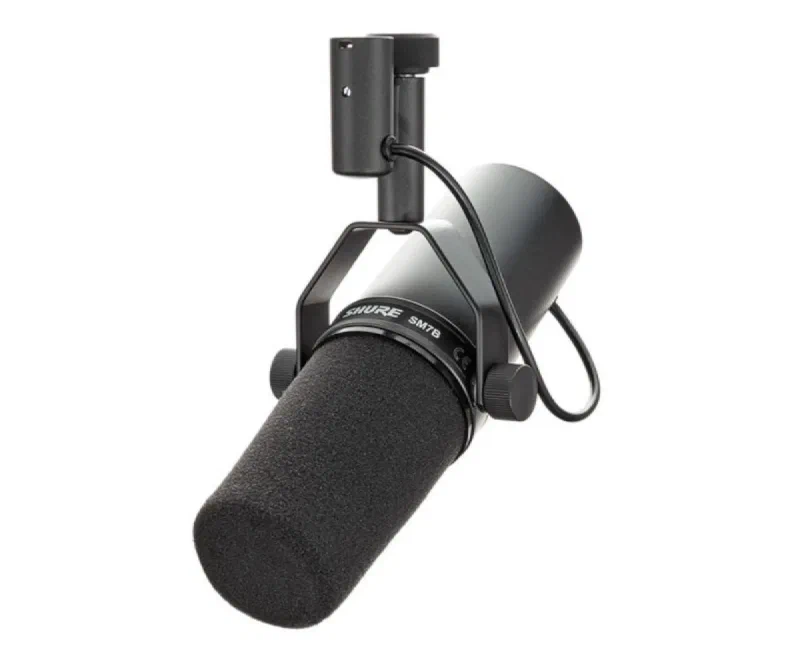
The problem with gear is that it is either expensive or bad. The gold standard for podcasters is the Shure SM7B. You will often see it used by many professionals, and maybe one day you will buy one too. If price is not an issue for you, start with it right away.
Fortunately, the Samson Q2U comes to the rescue. It is cheap, because its price is usually around 70-120 EUR (80-140 USD), and at the same time good enough to land right in the middle between good and cheap.
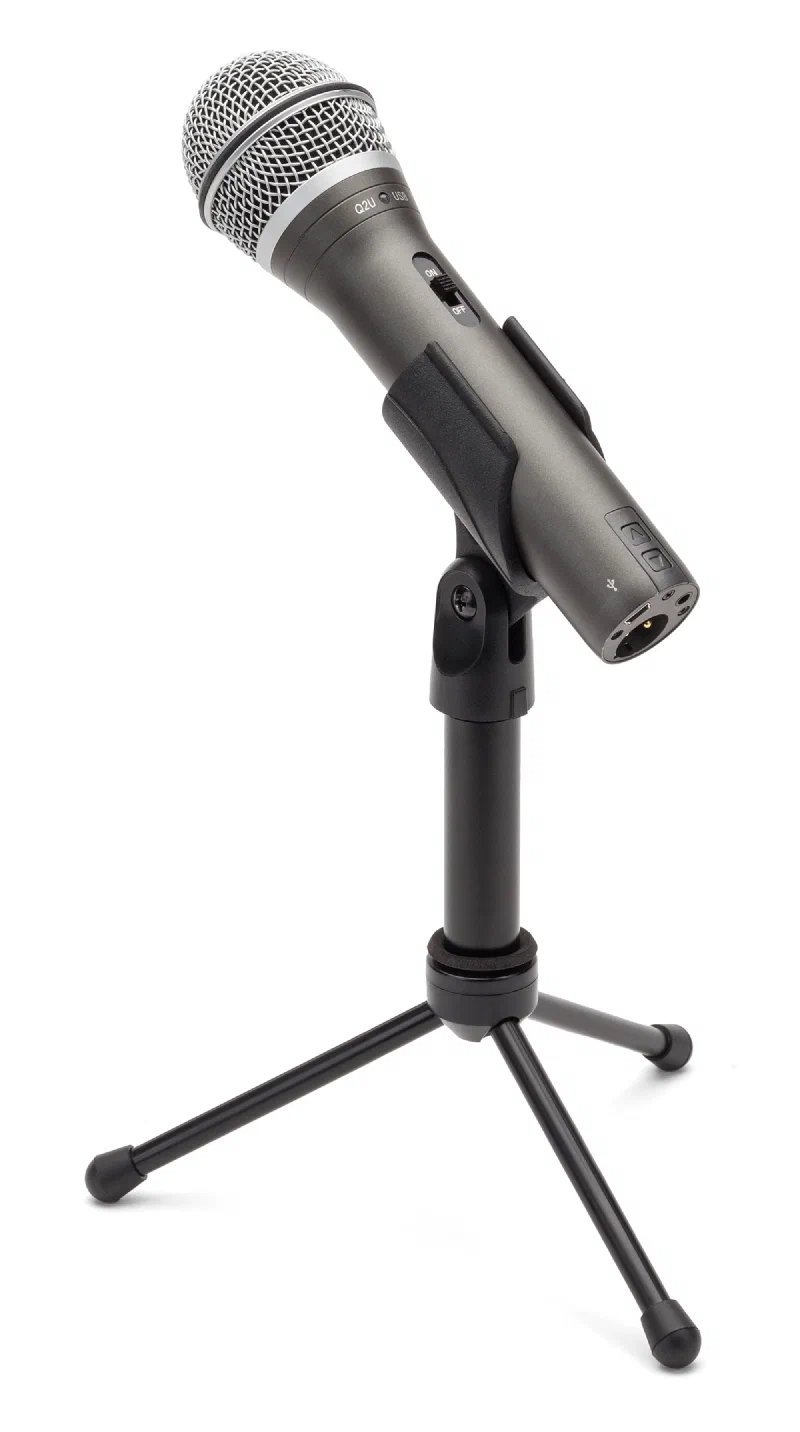
In the box you also get a small stand, a USB cable, an XLR cable, and a windscreen. The microphone has a built-in converter, so we can plug it into a computer with a USB cable and record. You can, but I do not recommend it. The converter is not very high quality, and its gain is also quite weak. Because of that, the microphone records rather “quietly”. What that means, I will describe in future posts about podcasting. The microphone itself also has one flaw: it strongly transfers vibrations. You cannot move it while recording, and putting it on a desk where you will rest your hands is also not the best idea. If you want to squeeze everything you can out of this gear, you need an audio interface.
Audio interface
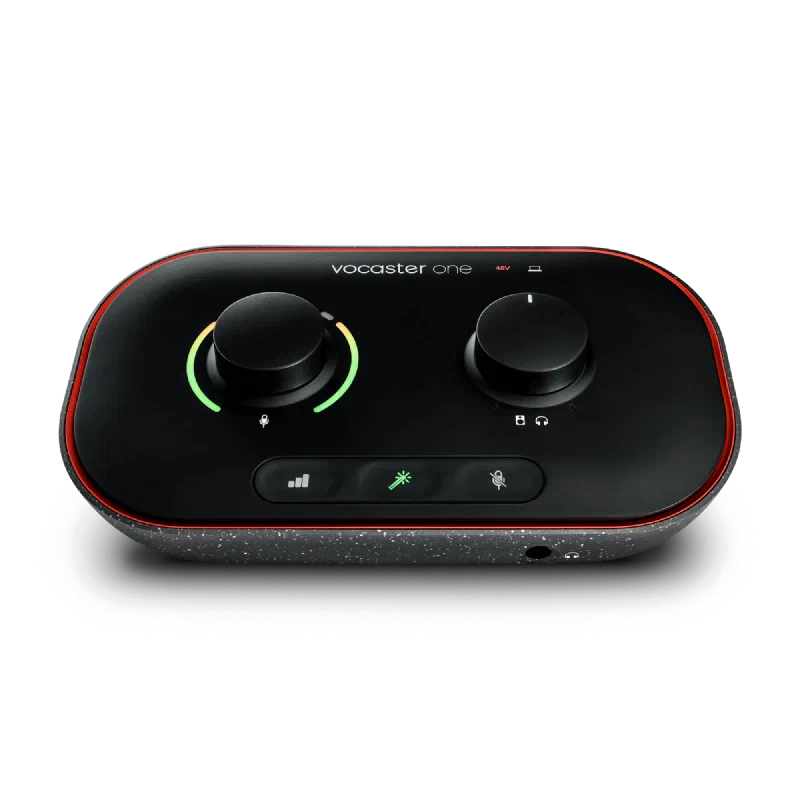
What features should the audio interface you need have? XLR input, +48 V phantom power (if you use a microphone preamp), and a headphone output. The rest is a bonus. I started with a cheap interface and a preamp to boost the signal, but only after some time someone recommended the Vocaster One to me. Maybe it is expensive (around 190 EUR, or 220 USD), but this is gear made for podcasts and it will stay with you even if you change the rest of your setup. Its software has built-in filters, it can set the gain automatically based on your voice, and on top of that it looks great:
What else?
Stand
That is almost everything. As I mentioned, the Samson transfers vibrations, so you need a stand. I bought a microphone stand online for around 17 EUR (19 USD). It is a bit light, but the price makes up for that shortcoming.
Headphones
You will also need headphones for monitoring while recording. Over-ear headphones are divided into open and closed ones. The choice between open and closed headphones depends mainly on where you use them: open ones usually offer better sound quality and a wider sense of space at home, while closed ones isolate you from the environment, which is perfect for travel or the office. Open ones are more comfortable because you sweat less in them. Since I am a corporate employee, I own closed headphones that I bought a long time ago, so I simply use them. The important thing is that they have a jack input.
Summary
I have listened to a whole lot of podcasts, mostly topic-focused ones. When I find a new podcast, I like to start with the newest episode. If it pulls me in, I go back to the beginning, and I will say it directly: very often the quality of the first episodes is weak or very weak. And even if the topic is interesting, the audio quality can be really discouraging. That is why I think that even if this is only supposed to be a hobby, maybe it is still worth starting by doing it well. Audio quality and content quality should go together like fries and ketchup after a long night out.